
Can You Sue Lyft for an Accident in California?
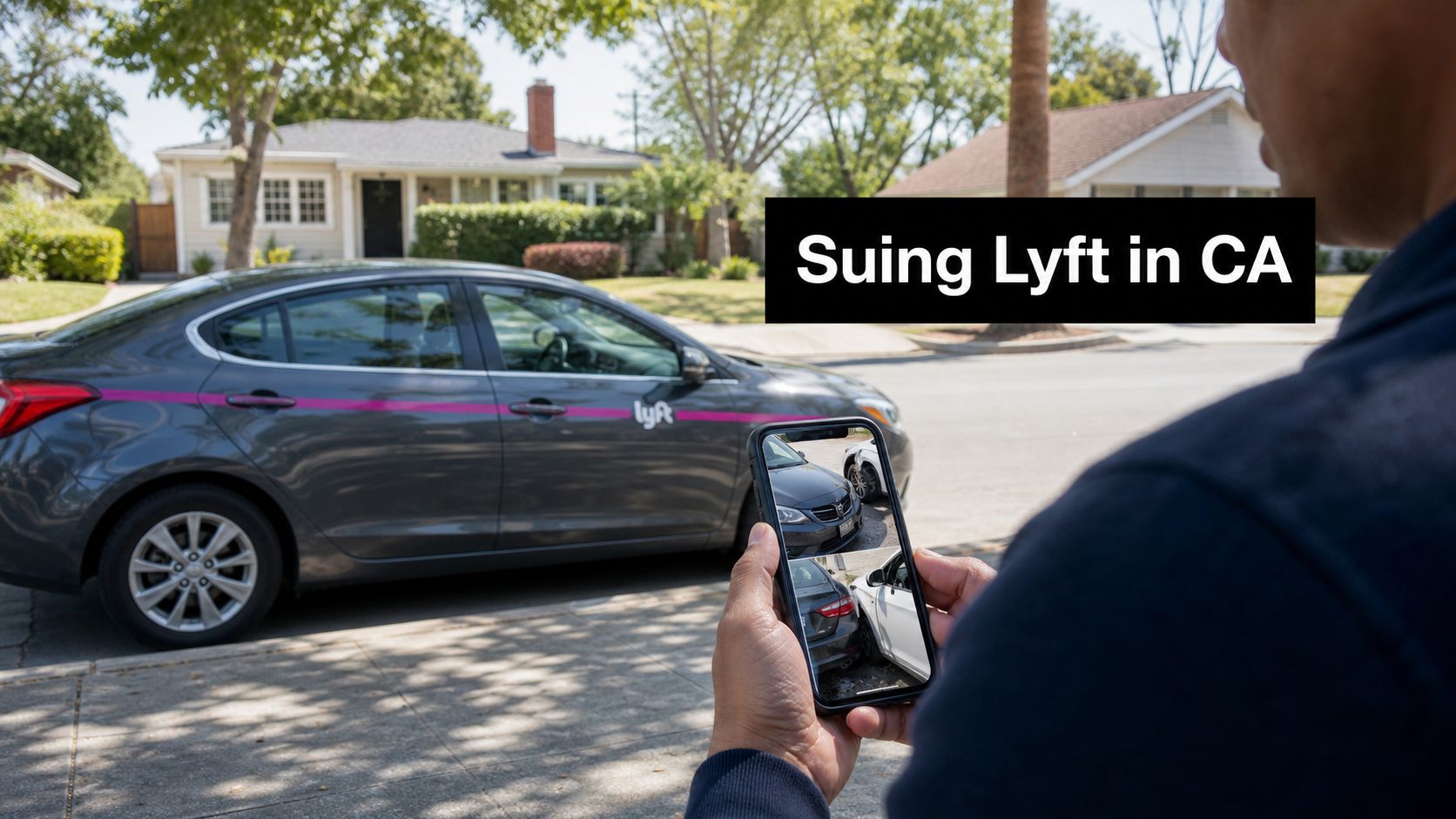
Yes, you can potentially sue Lyft after an accident, but in California the case usually turns on the driver’s app status, the at-fault insurance layer, and the 2-year filing deadline. In many crashes, the target is the driver’s insurer or Lyft’s $1 million policy, not a simple lawsuit against the platform itself.
If you were just in a Lyft crash, you’re probably trying to answer a few urgent questions at once. Who pays for the ambulance, who fixes the car, and who has legal responsibility when the ride went wrong? California’s rideshare rules make those questions more layered than a normal two-car collision, and the answer often depends on facts that can disappear quickly if nobody preserves them.
This article is for informational purposes and not to be construed as legal advice. No attorney-client relationship exists based on the review of this article, and none of the information in this article is legal advice.
The Moment After a Lyft Crash and Why the Legal Question Is Not Simple
A common Lyft crash starts in an ordinary moment of traffic. You get out of a Lyft in Los Angeles, the driver pulls forward, runs a red light, and another vehicle hits the ride hard enough to leave you injured and confused. The first question is usually, Can you sue Lyft for an accident? The honest answer is that you may be able to pursue compensation tied to a Lyft crash, but the right defendant is not always Lyft itself.
California rideshare cases work like stacked safety nets. One layer belongs to the driver, another may belong to Lyft, and a third party can also share blame if another motorist caused the crash. Lyft’s platform is also governed by California rules for transportation network companies, which is why the legal analysis is different from a standard fender bender. Lyft’s own Safety Transparency Report 2020 to 2022 says the incidents it discloses were statistically rare, occurring in only 0.0002% of rides.
Why the first legal move is identifying the right layer
The app status works like a switch that decides which insurance layer applies. When a driver is off the app, personal coverage may be the main source of recovery. When the driver is active in the app, Lyft’s commercial coverage can come into play.
Practical rule: the crash facts matter more than the ride app branding. A passenger, a pedestrian, and another driver may all have different claims from the same collision.
That is why the analysis has to move step by step. First, identify who was negligent. Then check whether Lyft’s insurance layer was active. Then look at the filing deadline before evidence and time start slipping away. A Lyft crash can look simple on the surface and still turn into a coverage fight underneath.
Who You Can Actually Sue After a Lyft Accident
The question is usually not whether someone can be sued. It’s who should be named and which insurer is really paying if the case succeeds. In a Lyft accident, the likely defendants are the driver, Lyft, or a third party such as another motorist, and sometimes more than one of them belongs in the case.
Lyft, the driver, and a third party are not the same target
Lyft usually argues that its drivers are independent contractors, not employees, so it is not automatically responsible for a driver’s negligence in the way a traditional employer might be. That does not end the inquiry.
There are also narrower situations where Lyft itself may face direct exposure. Those often involve issues like negligent screening, negligent retention, or platform-related defects. A plaintiff may argue that Lyft failed to catch a dangerous driver or that something about the platform contributed to the crash. That is different from saying Lyft is automatically responsible for every careless turn a driver makes.
| Defendant | When They Are Liable | Typical Recovery Source |
|---|---|---|
| Lyft driver | The driver was negligent, distracted, speeding, impaired, or otherwise caused the crash | Driver’s personal policy or Lyft-related coverage depending on app status |
| Lyft | Narrower cases involving screening, retention, or platform-related negligence | Lyft’s commercial or contingent coverage, depending on ride phase |
| Third party | Another driver, manufacturer, or other outside actor caused the harm | That party’s insurer, plus other available coverages |
What changes the practical strategy
A claim against the driver is often the cleanest starting point because fault is usually tied to a person’s conduct behind the wheel. A claim against Lyft becomes more complicated when the issue is not just negligence, but whether the company can be tied to the loss in a legally meaningful way. A third-party claim is often the right path when another motorist caused the collision, even if the passenger was inside a Lyft at the time.
The practical difference is not just legal theory. It affects where the money comes from, what defenses get raised, and whether the case is worth pursuing after insurance limits are considered. If another driver caused the crash, you may be dealing with that driver’s liability carrier first, and Lyft’s coverage only as a secondary layer when the facts support it. That is why “sue Lyft” is really shorthand for a broader liability map.
Lyft’s Insurance Layers and How App Status Changes Everything
Lyft coverage turns on the driver’s app status, and that status can matter just as much as fault. The app works like a switch with different coverage layers. When the driver is offline, one policy applies. When the driver is waiting for a request, a narrower Lyft layer may apply.

The three phases that decide coverage
When the driver is offline, the driver’s personal auto policy is usually the first place to look. Lyft’s commercial coverage generally does not apply because the driver is not using the platform.
When the driver is logged in and waiting for a request, Lyft’s contingent liability coverage may come into play, but it is much more limited than the active-ride layer. This is the phase where claims get disputed the most, because everyone points elsewhere and the coverage picture is not as generous.
That coverage can matter for passengers, other motorists, cyclists, and pedestrians, and it is why the same crash can have very different financial consequences depending on whether the ride was in progress.
Why uninsured and underinsured motorist coverage matters
There is another layer to think about when a third party causes the crash. If the at-fault driver has little or no insurance, an uninsured or underinsured motorist layer may become important, especially in an active ride. That can change recovery even when the rideshare driver did nothing wrong.
A Lyft crash is often a coverage puzzle before it is a courtroom case. If you do not know which phase the app was in, you may not know which policy is actually responsible.
This is why app screenshots, trip receipts, and ride timestamps matter so much. They help show whether the crash happened during a low-coverage period or during the phase where Lyft’s strongest commercial protection may apply. Without that proof, the case can get trapped in a blame shuffle between carriers.
Two Real-World Scenarios That Show How the Rules Play Out
A legal rule makes more sense once you see it in motion. Here are two realistic California scenarios that show how the same rideshare platform can lead to very different claims depending on who hit whom and what the app was doing at the time.
Scenario one, a passenger in an active ride is struck by another driver
A passenger is riding in Lyft through Santa Monica when a third-party driver runs a stop sign and hits the Lyft vehicle. The passenger was not driving, so fault usually starts with the other motorist. The first claim is often against that driver’s liability insurance.
If that driver has no usable insurance, the passenger may then look to Lyft-related coverage tied to the active ride. The up to $1 million layer can matter, especially when the injury is serious or the losses are broader than basic medical care. The passenger may also have a path to uninsured or underinsured motorist coverage, depending on the facts and the applicable policy language.
Scenario two, a pedestrian is hit while the Lyft driver is waiting for a request
Now assume a Lyft driver is logged into the app in Chatsworth but has not yet accepted a ride. The driver hits a pedestrian while making a turn. The legal analysis is different because the driver’s app status places the crash in a lower-coverage zone. The driver’s own conduct still matters, but the available insurance may be narrower than in an active-trip case.
That difference changes settlement dynamics fast. A serious injury case tied to active transport may have one insurance path. A waiting-for-request case may have a much tighter recovery ceiling and more resistance from carriers. That does not mean the pedestrian has no case. It means the claim must be framed against the correct layer from the start.
Why multi-vehicle crashes are harder
Some collisions split blame between several people. A distracted Lyft driver, a speeding third-party motorist, and a bad lane change can all be part of the same wreck. In that setup, the claim becomes a fault-allocation exercise rather than a one-defendant story.
The key takeaway is simple. The same crash can produce very different results depending on whether Lyft was active, who caused the impact, and which policy responds first.
Evidence to Preserve in the First Days After a Lyft Crash
The fastest way to weaken a rideshare claim is to let the digital trail fade. The scene itself is important, but Lyft cases also turn on app records, ride receipts, and status evidence that can be lost if nobody saves it early. Start with the physical evidence, then move to the app evidence, then lock down the paper trail.

The first records to capture
- Photos of the scene: take pictures of all vehicles, the license plates, the point of impact, skid marks, and any visible damage.
- Lyft trip evidence: save the ride receipt, trip map, timestamp, and screenshots showing whether the app was active.
- People who saw it happen: get the driver’s information, witness names, phone numbers, and any bystander who saw the traffic signal or lane movement.
- Environmental details: photograph weather, road surface, lighting, traffic controls, and any debris that shows how the crash unfolded.
You should also save the police report number, emergency room records, urgent care notes, imaging reports, and discharge instructions. Those records connect the crash to the injury, which matters when an insurer later tries to argue the pain came from somewhere else.
Why app data needs attention fast
Lyft-related evidence lives in more than one place. The driver’s status, ride acceptance time, GPS history, and support messages may all help prove the ride phase. If you wait too long, that data can become harder to obtain. Prompt notice to the company and the insurers helps preserve what matters before the record gets thin.
Practical move: treat your phone like an evidence locker. Screenshot everything before the app updates, the ride disappears from the main screen, or a carrier asks for a statement.
If a dashcam recorded the event, preserve it immediately. If another driver’s phone, vehicle camera, or nearby business camera might have caught the collision, identify it early. In a Lyft case, early evidence often decides whether the file becomes a straightforward insurance claim or a fight over what happened at all.
California’s Two-Year Deadline and What Happens If You Wait
California generally gives injured people 2 years from the date of the accident to file a personal injury lawsuit, and that deadline is often the first major milestone in a Lyft case. Two years can sound generous, but treatment, insurance negotiations, medical records, and investigation can consume a large part of that time before anyone realizes how close the filing window has become.
Why waiting feels safer than it is
Right after a crash, legal deadlines rarely feel urgent. People are focused on pain, work, childcare, and car repairs. That response makes sense, but evidence does not pause while someone recovers, and insurance companies do not keep the file open for a claimant’s convenience.
The 2-year clock can also create a false sense of safety. A month spent at the doctor, another month waiting for records, and several months of calls, emails, and claim handling can disappear faster than expected. By the time someone starts thinking seriously about filing suit, the calendar may already be doing damage.
What deadline problems can look like
Missing the filing window can erase an otherwise valid injury claim. That can happen even when the facts are strong and liability seems clear. Some situations involve exceptions or tolling, but those questions depend on the facts and should not be assumed without legal review.
Multi-party crashes can make timing even more complicated when a government vehicle or another special defendant is involved. Those situations can trigger different notice rules, so a person injured in a Lyft collision should not assume every defendant follows the same clock.
If you are still treating, still in pain, or still waiting on the police report, time is already passing. The deadline does not stop because the claim still feels unfinished.
A better way to view the statute of limitations is as a closing gate. You can keep collecting proof and pushing the claim before that gate shuts, but once it closes, the courthouse may no longer be open to you. In a Lyft accident, that makes early legal review a practical necessity, not a formality.
The Claims Process, Common Defenses, and What Litigation Actually Looks Like
Most Lyft claims begin outside court. The first step is notifying the relevant insurers, which may include the at-fault driver’s carrier and Lyft’s claims team. After that, a demand letter usually lays out liability, injuries, treatment, and the compensation being sought. If the insurer does not respond fairly, the file can move from claim handling into litigation.

What insurers usually push back on
Carriers often argue that the driver was offline, that someone else caused the collision, or that the injured person shares fault. They may also claim the medical issues were preexisting or that the treatment was too limited to justify a serious payout. Those defenses are routine, which is why a clean evidence file matters.
Lyft arbitration language can also come up, especially when the claimant is trying to sue the company directly. Arbitration may matter in some claims, but not every injury case gets forced into it, and the enforceability question can depend on the specific relationship between the parties and the nature of the claim. In practice, many cases still resolve through negotiation, while others move into a formal lawsuit when the insurer refuses to value the injury fairly.
What litigation actually involves
A lawsuit is not an instant payday. It starts with a complaint, then the other side answers, then the case enters discovery. Discovery can include document requests, written questions, depositions, and medical record review. After that, many cases go through mediation before trial becomes the last stop.
A simple way to think about it is this, claim handling is the opening conversation, and litigation is the structured fight over proof. The lawsuit creates deadlines, preserves pressure, and gives you tools you do not have in a casual insurance claim. That does not mean every case should be filed immediately, but it does mean a real dispute sometimes needs the court system to move.
You can also speak with a California personal injury firm, including LA Law Group, APLC, to review whether the driver, Lyft, or another insurer is the right target for your situation. That kind of review matters most when liability is disputed or when the app status and insurance layer are unclear.
Practical Next Steps and When to Call a California Attorney
Start with three moves in the first week. Get medical care, report the crash to the right insurer, and preserve every screenshot, receipt, and photo you have. If fault is disputed, if your medical bills are growing, or if Lyft denies the claim, a California personal injury attorney should look at the file quickly.
The key question is not just whether you can sue Lyft. It is whether the facts support a claim against the driver, Lyft’s insurance, another motorist, or several parties at once. If you are unsure which lane your case belongs in, that is exactly when a consultation helps.
This article is for informational purposes and not to be construed as legal advice. No attorney-client relationship exists based on the review of this article, and none of the information in this article is legal advice.
If you were hurt in a Lyft crash and need help sorting out fault, insurance, and the California filing deadline, LA Law Group, APLC can review the driver’s app status, the available coverage layers, and the evidence that needs to be preserved right away. Visit LA Law Group, APLC to request a consultation and get a clear read on your options after the accident.
Attorney Advertising. This article is general information, not legal advice, and does not create an attorney-client relationship. Prior results do not guarantee a similar outcome.