
California Fire Damage Lawyer: Your Claim
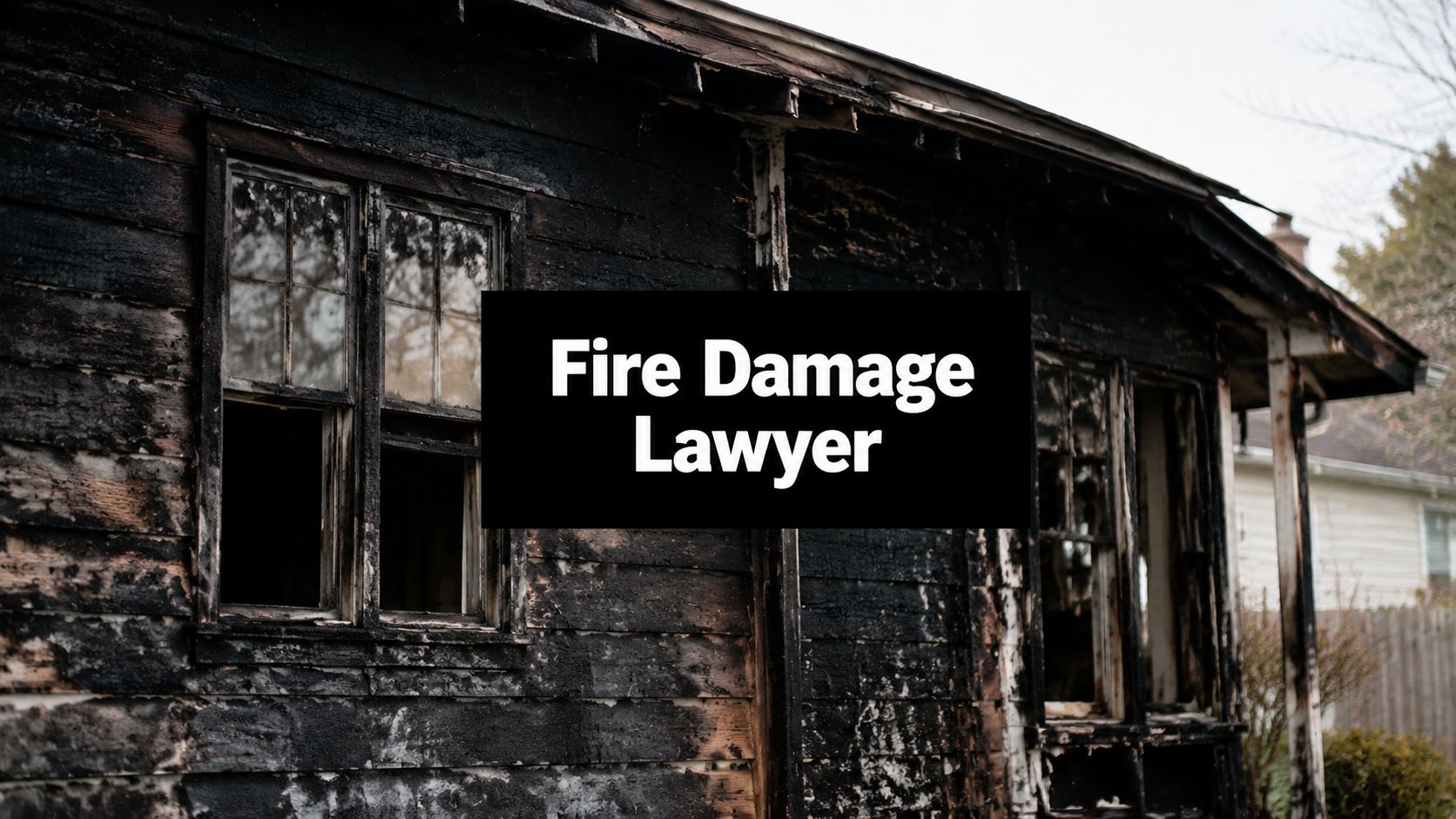
The first hours after a fire rarely feel organized. You’re dealing with emergency responders, family, pets, medications, a place to sleep, and the shock of seeing your home or business changed in a few minutes. Then the insurance process starts, and people begin asking for lists, photos, statements, receipts, and decisions before you’ve had time to breathe.
That early period matters. Fire claims are often won or lost in the documentation, the wording of early communications, and whether hidden damage is identified before cleanup erases the proof. The U.S. Those stakes are why a fire damage lawyer often gets involved long before a lawsuit is filed.
This article is for informational purposes only. It is not legal advice, and reading it does not create an attorney-client relationship. No attorney-client relationship exists based on your review of this article, and none of the information here is legal advice.
Introduction After the Fire First Steps Are Critical
A common California scenario looks like this. The fire department leaves, the structure is standing, and the insurance company says an adjuster will contact you. You assume the hardest part is over because the flames are out. In many cases, the actual dispute is only beginning.
Some losses are obvious. Burned framing, destroyed furniture, shattered windows. Others aren’t. Smoke can move through closets, attic spaces, ducts, insulation, electronics, and porous materials. Water used to put out the fire can create a second layer of damage. If you start cleaning too soon, throwing things away too soon, or relying only on the insurer’s first estimate, you can weaken your own claim without realizing it.
Why day one decisions affect the claim
A fire claim isn’t just a repair request. It’s a proof problem. You need to show what was damaged, how it was damaged, what it will cost to restore or replace, and what expenses the policy should cover in the meantime.
In practice, the first mistakes usually happen for understandable reasons:
- People clean before documenting. They want control back.
- People give quick answers on a stressful call. They guess instead of saying they need to verify.
- People focus on the burned room only. They miss smoke, soot, odor, and HVAC spread.
- People accept a partial payment as if it settles everything. Sometimes it doesn’t. Sometimes it does more than they intended.
Practical rule: Treat the fire scene like evidence until you’ve fully documented it.
For many families, language access also affects how confidently they handle an insurance claim. If Spanish-language legal resources would help you communicate more clearly during recovery, LA Law Group publishes materials in Spanish-language legal resources.
The right approach after a fire is calm, methodical, and documented. That doesn’t mean you need to know every coverage issue on day one. It means you need to avoid steps that make the proof harder later.
Immediate Actions to Protect Your Rights and Property
The first job is safety. The second is preserving the claim.

What to do in order
-
Make sure everyone is safe first. Don’t re-enter the property until the fire department or another qualified professional says it’s safe. Structural instability, electrical hazards, and toxic residue are common after a fire.
-
Secure the property against further loss. Board broken openings, lock accessible entries, and take reasonable temporary steps to prevent theft or weather intrusion. Insurers often expect policyholders to prevent additional damage after the event.
-
Notify your insurance company promptly. Report the loss, get a claim number, and ask where to send photos, receipts, and emergency repair invoices. Keep the first report simple and accurate. Don’t guess about cause, scope, or item values if you don’t know them yet.
-
Photograph and video everything before cleanup. Capture wide shots, room-by-room images, close-ups of damaged contents, ceilings, walls, vents, appliances, and any visible soot or water. Open drawers and closets if it’s safe. Hidden spread often matters later.
-
Start an expense file immediately. Save receipts for hotel stays, meals, clothing, medicine, temporary boarding for pets, storage, and emergency supplies. These out-of-pocket costs often become a point of dispute if they aren’t organized.
-
Create a communication log. Write down the name of every adjuster, contractor, investigator, and restoration vendor. Note dates, times, and what each person said they would do.
What to say and what not to say
The adjuster may ask questions that feel routine but can shape the claim early.
- Good approach: “I need to verify that before I answer.”
- Good approach: “I’ll provide photos and a written inventory.”
- Avoid this: guessing the total loss amount on the first call.
- Avoid this: saying a room is “fine” before smoke or soot testing is done.
- Avoid this: authorizing broad disposal of property before full documentation.
If you don’t know, say you don’t know yet. Accuracy beats speed in a fire claim.
Temporary mitigation can overlap with other emergency property problems. If firefighting efforts left standing water or sudden plumbing issues, a practical homeowner checklist like LA basement flooding emergency steps can help you think through immediate water-control measures while the larger claim is being evaluated.
A short checklist to keep by your phone
| Priority | Action | Why it matters |
|---|---|---|
| First | Get claim number | Keeps all later submissions tied to the file |
| Same day | Document all rooms | Preserves evidence before cleanup changes it |
| Same day | Save receipts | Supports reimbursement requests |
| Within days | Request policy copy | You need the actual coverage language |
| Ongoing | Keep a written log | Helps when timelines become disputed |
Understanding the Full Scope of Your Fire Damage Claim
Many policyholders think the claim equals the cost to rebuild the burned area. That’s too narrow. A proper fire claim works more like an itemized invoice. Each category of loss needs to be identified, supported, and valued.

The obvious categories people usually see
Start with the direct physical damage. That includes burned structural components, visible charring, broken windows, roof damage, and destroyed personal property. These are often noticed first because they are visible and immediate.
Then come the related costs that aren’t part of the basic repair line item:
- Contents loss involving furniture, clothing, electronics, tools, paperwork, and household goods
- Temporary housing and related living costs when you can’t safely stay in the property
- Debris removal and site cleanup
- Business interruption or lost income for commercial properties and some mixed-use situations
A good working habit is to separate each of those into its own folder. One blended pile of receipts and photos makes the insurer’s job easier, not yours.
The hidden categories insurers often minimize
The harder disputes often involve damage you can’t see at a glance. A fire damage lawyer’s case valuation often depends on separating direct fire loss from secondary smoke, soot, and water-mitigation loss, because insurers may treat them as different categories during adjustment.
That distinction matters in real claims because smoke doesn’t have to leave a black wall to create compensable damage. It can affect:
- HVAC systems that circulated contaminated air
- Porous materials such as insulation, upholstery, mattresses, rugs, and some clothing
- Electronics exposed to soot residue
- Cabinets and enclosed spaces where odor and particles settled
- Areas with firefighting water intrusion even if flames never reached them
Smoke-only claims are often scope disputes, not coverage disputes. The insurer may admit there was a fire but still undervalue what the fire affected.
Why timing changes the outcome
Cleanup crews serve an important role, but cleanup also changes the evidence. Once deodorization starts, contents are removed, or demolition begins, it may become harder to prove the original condition of the property.
That’s why lawyers often coordinate early with restoration professionals, contractors, contents specialists, and, in some cases, industrial hygienists or forensic experts. The point isn’t to create paperwork for its own sake. The point is to preserve proof before the scene is altered.
If you want broader reading on claim-related legal issues, the firm’s legal blog archive includes articles across California dispute and recovery topics.
When Your Insurance Company Becomes an Adversary
A lot of policyholders call a lawyer after they realize the insurer isn’t really disputing that a fire happened. The insurer is disputing what must be paid for.

Fire claims frequently become contested because insurers and policyholders disagree over valuation and coverage.
Red flags that the claim is going off course
The insurer doesn’t need to deny the entire claim to create a serious problem. Partial underpayment can be just as damaging.
Watch for patterns like these:
- The estimate addresses only burn damage. Smoke, soot, odor, contents cleaning, and water mitigation are barely mentioned or omitted.
- The adjuster keeps changing. Every new person asks for the same documents and the file loses momentum.
- You get broad requests without clear explanation. The insurer asks for more and more material but doesn’t say what issue it is trying to resolve.
- The temporary housing discussion becomes restrictive. You’re told the home is technically livable even when normal use isn’t realistic.
- The carrier pressures a quick resolution. You’re encouraged to sign off before all categories of loss are fully evaluated.
What underpayment often looks like in practice
A low offer usually isn’t labeled as a low offer. It comes in the form of omissions.
For example, an estimate may include repainting a room but not cleaning or replacing contaminated contents. Or it may allow local patchwork when the actual issue is system-wide smoke migration through return air ducts. In commercial losses, the insurer may focus on physical repairs while treating downtime and extra operating expenses as secondary.
For a plain-language overview of common homeowner coverage questions, this guide on what your policy covers after fire can help you compare the insurer’s position against the categories people often expect to be covered.
When it makes sense to escalate
A reasonable dispute can become an adversarial claim quickly once deadlines slip, inspections feel incomplete, or the insurer starts narrowing the loss categories.
This short video gives a useful general perspective on disputed insurance claims:
The moment you feel forced to prove every obvious point from scratch, treat the claim as contested.
At that stage, a fire damage lawyer isn’t there just to argue. Their primary job is to reorganize the claim around evidence, policy language, and a defensible valuation.
How a California Fire Damage Lawyer Builds Your Case
A California fire claim often turns on whether the loss is framed narrowly or completely. That’s where legal strategy matters. A fire damage lawyer doesn’t just submit forms. The lawyer builds a record that is harder to discount.
Building proof before the scene changes
In serious fire losses, counsel often works with more than one type of expert. The right mix depends on the claim.
A case may involve:
- A contractor or estimator to price structural repair correctly
- A contents specialist to inventory and evaluate personal property
- A restoration consultant to address smoke, soot, and cleaning scope
- An engineer or other technical professional when causation, structural concerns, or hidden damage are disputed
- Financial support for business records where interruption losses are part of the claim
Many self-managed claims frequently stall. The insurer has its adjusters, preferred vendors, and internal processes. The policyholder often has stress, a damaged property, and incomplete information. A lawyer’s role is to level that imbalance and force the claim into a disciplined record.
California wildfire claims add extra layers
In California, wildfire claims can be especially complex. They may involve disputes over causation, utility-related issues, temporary living costs, and business interruption.
That practical point comes up often. A house can be standing and still be unfit for normal life because of smoke contamination, cleanup conditions, lack of utilities, or safety concerns. The insurer may use a narrow habitability view. A lawyer pushes the discussion back to what the policy covers and what conditions exist.
A home doesn’t become livable just because the roof remained in place.
What legal counsel actually changes
When a lawyer enters the claim, the work usually shifts in three ways:
| Without counsel | With counsel |
|---|---|
| Informal back-and-forth | Structured written demands and responses |
| One estimate controls the narrative | Competing evidence is assembled and preserved |
| Expenses are submitted loosely | Expenses are categorized and tied to coverage issues |
Lawyers also watch deadlines carefully. Fire claims can raise contract issues, litigation deadlines, and notice problems that aren’t obvious to a family trying to recover day to day. Those timing issues are one reason early advice matters even before a lawsuit is considered.
If you’re comparing professional help, resources discussing support for homeowners’ claims can help you understand the different roles public adjusters and attorneys may play. In some matters, policyholders also consult firms such as LA Law Group, APLC for claim review, negotiation strategy, and California litigation analysis.
Choosing Your Lawyer What to Ask and How Fees Work
Individuals typically hire a fire damage lawyer only once in their lives, if ever. You don’t need to know every legal term. You do need to know how to screen for fit.

Start with the fee structure
Many fire loss attorneys work on a contingency fee in the right kind of case. But don’t stop at the phrase itself. Ask what expenses are separate, when they are incurred, and whether the fee applies only if money is recovered. It is worth asking how fees and case costs work and getting the terms in writing.
If a lawyer proposes hourly billing, it is worth asking for a realistic description of how that works in a claim that may require experts, repeated document review, and negotiation with a carrier over time.
Questions worth asking in the first consultation
Bring the policy if you have it. Bring the denial letter or estimate if you have that too. Then ask direct questions.
- How much of your work involves fire claims? You want experience with smoke, contents, temporary housing, valuation disputes, and not just general personal injury or business disputes.
- Who will handle day-to-day communication?
- What happens if the insurer has already made a partial payment? That’s a practical issue, and the lawyer should be comfortable explaining it.
- When do you try to resolve and when do you prepare for litigation? Good lawyers think on two tracks at once.
- What documents do you want from me now? A clear intake list is a good sign.
Signs of a good fit and signs to walk away
A strong consultation usually feels specific. The lawyer asks about the property, the policy, the current estimate, temporary living conditions, and what has already been discarded or cleaned.
Be cautious if you hear only broad promises.
Ask for a process, not a slogan.
You should also understand how the firm communicates. If your claim is stressful, poor communication will make it worse. Clients who want to evaluate a firm’s broader professional background can review a firm’s awards and recognitions page along with licensing, reviews, and published work.
Take Control of Your Recovery with LA Law Group
After a fire, people often think they have only two choices. Accept what the insurer offers, or gear up for a long court fight. In reality, many claims are resolved in the middle ground, where careful documentation, strategic pressure, and strong policy analysis change the outcome.
The key is acting before the file hardens in the wrong direction. If smoke damage was minimized, if temporary living costs were narrowed, if business interruption was brushed aside, or if the insurer treated a complex California wildfire claim like a routine repair estimate, you don’t have to carry that dispute alone.
A fire damage lawyer helps by slowing the process down where it needs caution and speeding it up where delay is hurting you. That includes preserving evidence, organizing the claim, pushing back on underinclusive estimates, and identifying losses the insurer may be treating as optional when they aren’t.
If you’re speaking with counsel, ask direct questions. Ask how they would prove hidden contamination. Ask how they would handle relocation costs if the property is only habitable on paper. Ask what documents they need now, before another inspection or cleanup changes the evidence.
This article is for informational purposes only. It is not legal advice, and reading it does not create an attorney-client relationship. No attorney-client relationship exists based on your review of this article, and none of the information in this article is legal advice.
If you need help evaluating a California fire loss, LA Law Group, APLC offers a free, no-obligation case evaluation for qualifying matters. The firm serves clients across California and offers Spanish-language assistance. If your claim involves underpaid smoke damage, wildfire displacement, business interruption, or a broader dispute over what the policy should cover, you can contact the firm to discuss next steps and whether representation makes sense for your situation.
Attorney Advertising. This article is general information, not legal advice, and does not create an attorney-client relationship. Prior results do not guarantee a similar outcome.