
Is Radar Detector Legal in California? 2026 Rules
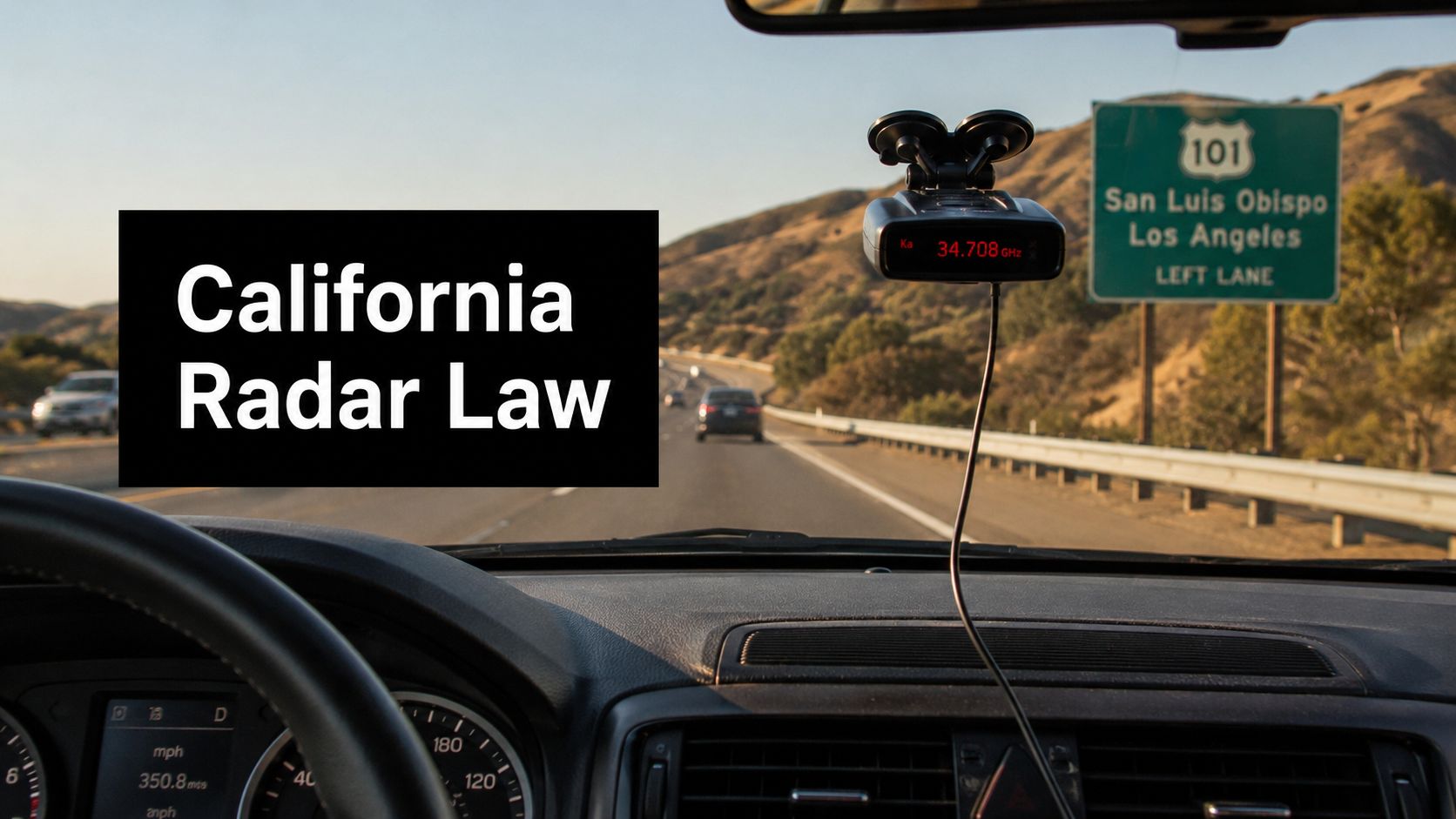
Radar detectors are generally legal for private passenger vehicles in California. Windshield mounting that obstructs the driver’s view is illegal under Vehicle Code Section 26708, and radar or laser jammers are strictly prohibited under Vehicle Code Section 28150.
You bought the detector because you want an edge on California roads, not a headache at the next traffic stop. Good instinct, but the legal trap isn’t the detector itself, it’s how you mount it, what kind of device it really is, and whether you’re driving a vehicle class that can’t use one.
For a practical overview of commercial driving rules that can overlap with roadside equipment issues, My Safety Manager’s California guide is a useful starting point. If you’re trying to answer related traffic-law questions, this FAQ page is another straightforward reference.
This article is for informational purposes only and is not to be construed as legal advice. No attorney-client relationship exists based on the review of this article, and none of the information in this article is legal advice.
The Quick Answer on Radar Detector Legality
You’re sitting in traffic, your new detector is already on the dash, and you want the straight answer. Here it is, no drama: radar detectors are generally legal for private passenger vehicles in California, but windshield mounting that obstructs your view is illegal, and radar or laser jammers are prohibited.
The answer in plain English
If your device is a passive radar detector, California generally allows it in a private passenger car. The problem starts when drivers mount it where it blocks sight lines or when they confuse a detector with a jammer. A legal device can become a citation issue if it sits on the windshield in a way that interferes with the driver’s view under California Vehicle Code Section 26708.
That distinction matters because police and courts care about what the device does and where it sits. A detector listens. A jammer interferes. California treats those two categories very differently, and the jammer side is where the trouble begins under Vehicle Code Section 28150.
Practical rule: If it talks, listens, or alerts, check whether it’s passive. If it emits interference, leave it out of your car.
For a quick outside reference on the commercial-driving side of California traffic rules, see understanding vehicle code 23152(a) from Bada Bing Bail Bonds, which helps put vehicle-code enforcement in context.
What you should do right now
If you already bought the detector, keep it only if it’s a passive receiver and mount it where it doesn’t block your windshield view. If you’re tempted by a “jammer,” stop there. California doesn’t give you a pass because the gadget looks high-tech or came bundled with other accessories.
That’s the clean answer. The rest of this article breaks down the code, the device types, the mounting mistakes, and the enforcement realities that trip people up.
California Vehicle Code Sections That Govern Radar Detectors
California law does not rely on a single, broad radar detector ban. It uses targeted rules that catch the problems drivers create, a detector mounted where it blocks the windshield and a device that crosses the line into jamming. That is why drivers often assume they are fine until a traffic stop becomes a citation.
The windshield rule is the first trap
California Vehicle Code Section 26708 is the statute that matters when a detector is stuck to the glass in a way that blocks the driver’s view. The issue is not whether the device is electronic or portable. The issue is whether it interferes with the driver’s ability to see the road clearly.
A detector can be lawful as a device and still create a violation when it sits in the wrong place. A dashboard mount usually gives the driver less trouble than a windshield placement because the law focuses on obstruction, not convenience. If the device sits high, wide, or awkwardly enough to cut into your sight lines, you are creating an avoidable problem.
Section 28150 draws the hard line

California Vehicle Code Section 28150 makes it unlawful to use, buy, possess, manufacture, sell, or distribute a radar or laser jammer, and a violation is an infraction. Possessing four or more of those devices can increase exposure to a misdemeanor under the same section. You can read the statute itself in California Vehicle Code Section 28150.
That statute reaches more than one bad use case. It covers possession, sale, and distribution, so the law is not limited to a device being switched on at the moment of a stop. Once your setup crosses from passive detection into active interference, California stops treating it like a harmless accessory.
Officers usually do not care about marketing copy. They look at the device, where it is mounted, and whether it appears to block vision or interfere with enforcement tools. If you want a broader traffic-law reference point, understanding vehicle code 23152(a) helps show how California approaches roadside enforcement in practice.
Courts and officers usually care less about marketing language and more about function. If the gadget disrupts radar, it belongs in the prohibited category.
For drivers who want a broader traffic-law reference point, LA traffic law and related accident guidance can help frame how California treats roadside violations in practice.
Passive Detectors Versus Active Jammers
The biggest mistake I see is simple. Drivers buy a “detector” but never verify whether they’re holding a passive receiver or an active jammer. That difference is not cosmetic, it’s the whole case.

What the device actually does
A passive detector only listens for police radar energy and alerts the driver. That’s why California generally allows it for private passenger vehicles. It doesn’t send anything back, it just receives.
An active jammer does the opposite. It emits interference to disrupt police radar. California prohibits that under Vehicle Code Section 28150, and that’s the line you don’t want to cross.
If you want the simple analogy, use this one. A detector is like a radio that picks up a signal. A jammer is like a device that scrambles the signal. One is listening, the other is fighting back.
Why the law cares so much
The legal system treats these devices differently because the conduct is different. Passive detection is warning the driver. Active jamming is attempting to defeat enforcement equipment. California’s statute reflects that distinction directly, and that’s why the consequences track the jammer, not the detector.
For a plain-language explanation of how police radar is detected in the field, Ticket Shield’s radar gun guide is a solid companion read. It helps show why an alert-only device sits in a different category from one that transmits interference.
If your product description uses words like “block,” “spoof,” “jam,” or “disrupt,” assume trouble. If it says “detect,” “alert,” or “receive,” you’re in the passive camp, but you still need to mount it legally.
Legal Mounting and Installation Practices
A legal detector can still get you stopped if you install it lazily. California cares about sight lines, and officers do too. If the unit is stuck where it blocks the windshield, you’ve created your own problem.
Mount low and keep the glass clear
The safest move is to place the detector where it doesn’t interfere with the driver’s view. That usually means a lower dashboard position or another spot that keeps the windshield unobstructed. The basic rule is simple, if you have to lean or peer around it, it’s in the wrong place.
Do not rely on the idea that “small” equals “safe.” A compact device can still be illegal if the mounting point blocks part of the view that matters. California Vehicle Code Section 26708 focuses on obstruction, not on whether the object looks minor.
Avoid the easy mistakes
- Windshield suction mounts: These are the biggest risk if they sit in the driver’s line of sight.
- High center placements: If you have to look through or around the detector, rethink it.
- Loose cords across the wheel area: Officers notice clutter that interferes with safe operation.
- Aiming for convenience over visibility: Convenience doesn’t beat obstruction rules.
Keep the windshield clean, keep the view open, and keep the device low enough that it doesn’t draw a second look.
If you’re using a visor clip or a dash mount, test it from the driver’s seat before you hit the road. Sit normally, look straight ahead, and ask one question, does this setup block anything important? If the answer is yes, move it.
Common Myths About Radar Detector Laws in California
Radar detector misinformation spreads fast because people repeat half-truths. The result is predictable, drivers assume they’re safe when they’re not. Don’t make that mistake.

The myths that cause the most trouble
Myth 1, radar detectors are completely illegal in California. That’s wrong. The better rule is that passive detectors are generally legal for private passenger vehicles, but mounting and jammer issues still matter.
Myth 2, only truck drivers have to worry about this law. Also wrong. While commercial vehicles face separate problems, passenger drivers can still get into trouble with obstruction or jammer violations.
Myth 3, mounting location doesn’t matter. Flatly false. The wrong windshield placement can turn a legal device into an illegal setup under the obstruction rule.
The commercial-vehicle confusion
A lot of online advice mixes passenger-car rules with commercial-vehicle rules and ends up muddying the water. If you drive for work, assume the vehicle classification matters more than the device packaging. If you drive your own car, don’t assume you’re safe just because you’re not in a truck.
The key point is simple. California’s radar-detector question is not one universal yes or no. It turns on device type, vehicle type, and mounting location.
Penalties and Enforcement Realities
Most drivers do not get cited just for owning a detector. They get cited because the installation is sloppy, the device crosses into jammer territory, or the officer can point to a clear equipment violation during the stop. That difference separates a minor roadside headache from a citation that can follow you.
What enforcement usually looks like
A traffic stop usually starts with what the officer can see from outside the car. A detector stuck on the windshield can create an obstruction issue, even if the device itself is passive and otherwise lawful. If the unit appears to function as a jammer, the matter gets more serious immediately because California treats that equipment differently.
Officers do not care about the marketing copy on the box. They care about the setup in front of them. If the device is visible, mounted badly, or looks like prohibited equipment, the stop can turn into a written citation instead of a warning.
Why the consequences matter
A jammer violation is not a casual equipment issue. California Vehicle Code Section 28150 makes the conduct unlawful and classifies a violation as an infraction, with possession of four or more devices capable of raising the exposure to a misdemeanor. That is a steep problem for a driver who thought the whole issue was just about avoiding speed traps.
If you are dealing with a citation tied to a traffic stop or a vehicle equipment issue, this California traffic accident and citation resource explains how traffic matters can develop after an incident. It does not change the statute, but it helps you see why a detector stop can turn into a bigger legal mess than you expected.
Bottom line: Do not treat a detector citation as harmless. A bad mount or the wrong device can leave you with a paper trail, and that is a problem you may have to clean up later.
Your Compliance Checklist and Next Steps
If you want to stay out of trouble, stop overthinking the brand and start checking the legal basics. California is pretty simple here, if you respect the device type, the mounting location, and the vehicle classification.

Use this checklist before you drive
- Device Type: Confirm it’s a passive detector, not a jammer.
- Vehicle Class: Verify the vehicle is a private passenger car, not a commercial setup.
- Mounting Position: Keep it out of the windshield view and away from obstruction issues.
- Use Case: Don’t treat it like a license to speed.
- Citation Response: If you’ve already been stopped, gather photos of the installation and the device before you do anything else.
What to do if you already got cited
If you received a citation, pull the exact facts together right away. Take clear photos of where the device was mounted, save the product information, and note what the officer said at the stop. Those details matter because the legal issue may turn on obstruction, jammer classification, or vehicle type.
If you’re in doubt, speak with a traffic lawyer before you pay or plead on autopilot. That’s especially true if the citation mentions a jammer, if you drive a commercial vehicle, or if the officer wrote the ticket based on windshield placement.
For fast next-step help, schedule an immediate consultation and get the issue reviewed before it gets more expensive than it needs to be. If you want direct guidance from a California firm that handles traffic-related matters with a practical approach, visit LA Law Group, APLC and ask about your situation before you make your next move.
Attorney Advertising. This article is general information, not legal advice, and does not create an attorney-client relationship. Prior results do not guarantee a similar outcome.