
Premises Liability Negligence in California: A Full Guide
You’re in the grocery aisle, the floor looks clean, and then your foot slides on a patch you never saw. In the next few seconds, a simple errand turns into a wrist fracture, a stack of medical bills, and a manager who suddenly says, “We had no idea there was a spill.” This article is for informational purposes only and isn’t legal advice. No attorney-client relationship exists from reading it, and none of the information here should be treated as legal advice.
California premises liability negligence starts with a basic idea that still drives hard-fought cases, the person or business controlling the property has to use reasonable care to keep the area safe. Under California’s negligence framework and the CACI instructions that govern jury trials, the fight usually turns on what the possessor knew, what they should have known, and whether they acted like a reasonably careful property controller under the circumstances. If you want a consumer-friendly starting point, this California slip and fall suit guide is a useful companion, but the mechanics are more specific than most summaries suggest.
How Premises Liability Negligence Claims Work in California
A Sacramento shopper doesn’t care about doctrine when she’s on the floor after stepping into a hidden wet patch in a dim grocery aisle. She cares that the light was poor, the spill wasn’t marked, and the store had the chance to fix the problem before she was hurt. That’s the practical shape of premises liability negligence, a negligence claim brought by an injured visitor against the person or entity that controlled the property condition.
California law puts the focus on reasonable care under the state’s general negligence rule, and the jury instructions translate that into questions jurors can answer. The legal analysis isn’t limited to ownership. It follows control, maintenance, warnings, inspection practices, and whether the hazard was discovered or should have been discovered in time to do something about it.
The difference between premises liability and ordinary negligence is where the duty lands. In an office-building case, a broken stair, a dark hallway, or a spill in a common area puts the property condition at the center of the case. In a restaurant or retail store, the same duty analysis applies, but the business’s inspection routine, employee response, and warning practices become the evidence that matters most.
Practical rule: most premises cases are won or lost on proof of what the defendant knew, what it should have known, and whether it had a real safety system in place.
The rest of the claim usually comes down to duty, breach, causation, damages, and comparative fault. That’s the structure judges and adjusters keep returning to, even when the facts are messy and the defense tries to reframe the case as a simple accident.
The Four Elements of Premises Liability Negligence

A premises case is not just a story about someone falling. It’s proof that the defendant owed a duty, broke it, caused harm, and left the injured person with real damages. The cleanest way to think about it is through the CACI negligence framework, because that’s how a jury will be asked to decide the case.
Duty and breach
The duty question asks whether the possessor had an obligation to keep the premises reasonably safe. California’s modern approach treats that as a reasonable care duty, not a box-checking exercise based on visitor labels. The possessor must act like a careful owner, tenant, occupier, or controller would act when a hazard is foreseeable.
Breach is where the case gets concrete. A warehouse that leaves a pallet in a blind corner without inspection or warning is inviting the jury to ask whether the safety system failed. A resort that ignores a wet pool deck, or doesn’t repair repeated drainage problems, gives the plaintiff a way to argue that the owner did not use reasonable care to inspect, warn, or repair.
Causation and damages
The plaintiff still has to connect the breach to the injury through substantial-factor causation. A slip that happens because a hazard sat there unaddressed is very different from a fall caused by an unrelated medical event, a sudden shove, or an intervening force that breaks the causal chain. That distinction often decides whether the case survives the defense motion and reaches a jury.
Damages are the last piece, but they’re not decorative. Medical bills, lost income, future treatment, pain, and loss of enjoyment all matter because they define the value of the claim, not just the fact of injury. A resort-pool case with a bruised ankle and a warehouse-pallet case with a spinal injury can both satisfy the elements, but they obviously don’t carry the same settlement pressure.
A plaintiff who can show each element with photographs, records, witness statements, and treatment documentation has a real case. A plaintiff who can’t tie the hazard to the injury, or can’t show how the defendant missed a safety problem, usually has a harder road.
Who Owes the Duty of Care on California Property
California premises cases often turn on a practical question that sounds simple and isn’t. Who controlled the area where the injury happened? Legal title matters less than the day-to-day reality of who inspected, maintained, and operated the property.
The parties you can sue are often broader than the name on the deed. A landlord may control common areas, a tenant may control the leased space, a property manager may handle inspections, and a maintenance contractor may be the one who created or ignored the hazard. The practical control test is what lets the case move beyond paperwork and into actual responsibility.
A mixed retail center is the classic example. The landlord may own the lot, the national tenant may control the storefront, and the janitorial vendor may be the one that mopped, missed a warning sign, or failed to document a spill response. Each role matters because each role can carry a different slice of the duty.
| Possessor Role | Source of Control | Duty Owed Under California Law |
|---|---|---|
| Owner | Title plus retained control over parts of the property | Reasonable care to keep the property reasonably safe |
| Tenant or lessee | Possession of the leased area and operational control | Reasonable care over the space the tenant controls |
| Occupier or controller | Actual management, maintenance, or supervision | Reasonable care based on the area or condition controlled |
| Property manager or contractor | Assumed inspection or maintenance responsibility | Reasonable care within the scope of the work undertaken |
A defendant can’t usually hide behind a lease if it actually ran the safety operation.
That’s why the control evidence matters so much. Lease language, work orders, janitorial schedules, and who had the authority to fix the problem can shift liability from one defendant to another, or spread it across several. If the injury happened in a common area, the landlord and the operator may both be in play.
California Statutes, CACI Instructions, and the Reasonable Care Standard
California premises cases used to be framed through visitor categories, but modern analysis centers on reasonable care. The older invitee-licensee-trespasser model still shows up in arguments, but California’s negligence approach now puts the stress on foreseeability, control, and the quality of the safety response rather than rigid labels. That shift matters because it changes the litigation from status to conduct.
The jury instructions do most of the heavy lifting. CACI 1000 sets the basic duty-of-care frame, CACI 1003 addresses dangerous conditions on land, and CACI 1004 addresses notice. Those instructions sit on top of Civil Code section 1714, which supplies the general negligence backdrop, and Code of Civil Procedure section 335.1, which supplies the two-year limitations period for personal injury claims.
California also draws from the broader reasoning in Rowland v. Christian, the landmark reasonable-care decision that pushed the law away from status categories and toward ordinary negligence principles. The current framework is also consistent with the Restatement (Third) of Torts, which treats land possessor duty as a general duty of reasonable care for physical harm rather than a rigid status test.
What the rule means in practice
The law asks whether the possessor had a prevention system that was reasonable. That means routine inspection, prompt cleanup, lighting, housekeeping, and a real response to known recurring hazards. It does not mean waiting for someone to fall before acting.
| Authority | Type | What It Establishes |
|---|---|---|
| Civil Code section 1714 | Statute | General duty of reasonable care |
| Code of Civil Procedure section 335.1 | Statute | Two-year personal injury limitations period |
| CACI 1000 | Jury instruction | Basic standard of care |
| CACI 1003 | Jury instruction | Dangerous condition on land |
| CACI 1004 | Jury instruction | Notice rules tied to dangerous conditions |
| Rowland v. Christian | Case law | Modern reasonable-care approach |
The defense often tries to make the case about labels, but California juries are asked to evaluate conduct. That’s why inspection records, repair timing, and warning practices matter more than a technical argument about who the injured person was in relation to the property.
Proving Breach Through Inspections, Maintenance, and Prior Incidents
Breach becomes persuasive when the plaintiff can show the property owner didn’t run a serious inspection and repair program. A jury is far more likely to find negligence when the records show a pattern of missed checks, slow repairs, or no meaningful system at all. A defendant saying “we usually take care of it” is weak compared to a dated log proving exactly what happened before the fall.
The inspection cadence problem
Inspection cadence is the first thing I look for. Written schedules, supervisor sign-offs, work-order timestamps, and deviation from the ordinary routine tell the story. If the defendant can’t produce those records, the plaintiff’s case often gets stronger because the absence itself can support an inference that the safety system was sloppy.
Maintenance records matter just as much. Vendor invoices, repair notes, and cleaning logs can confirm whether the hazard was addressed, ignored, or handled only after the injury. A reactive-only history is a red flag because it suggests the property owner waited for a problem to become obvious before doing anything.
Prior incidents and preservation
Prior complaints and similar incidents are powerful because they show the defendant knew the risk was not random. The admissibility fight usually turns on how similar the earlier event was, not whether it was identical. That’s a real litigation issue, not a theoretical one, and it often shapes settlement dynamics.
If the surveillance video is overwritten, the inspection log disappears, and no one preserves the incident report, the defense gets a cleaner story than it deserves.
The practical move is simple, preserve the evidence early. Retention policies, employee statements, and incident-report timelines are often the difference between a triable breach claim and a defense summary judgment motion. When the paper trail is thin, the plaintiff has to build the case from circumstantial proof instead of direct records.
Actual and Constructive Notice in California Premises Cases
Notice is where a lot of slip-and-fall cases are won or lost. California recognizes actual notice and constructive notice, and the difference changes the whole case theory. Actual notice means someone on the property knew about the hazard, while constructive notice means the condition was there long enough, or in circumstances obvious enough, that a reasonable inspection would have found it.
Actual notice is the easier path when the records exist. An email to the manager, an incident log, a work order, or a verbal complaint memorialized in a statement can prove that the owner or employee knew the risk was there. If the dangerous condition was created by an employee, the plaintiff may not need to prove notice at all, because the defendant caused the condition.
Constructive notice is usually built from timing and inspection failures. If a spill sat on the floor long enough that a reasonable inspection would have caught it, the defendant can be charged with knowledge. That’s why defense inspection routines become central proof, not background noise. When the inspection cadence is weak, the plaintiff can argue the hazard would have been discovered by a reasonably careful operation.
The notice dispute also shows up when a store uses temporary workers or shifts responsibility too loosely. If no one can say who inspected the area or when, the defense loses the ability to point to a clean chain of responsibility. That gap is often more valuable to the plaintiff than a single eyewitness.
| Notice Theory | What Plaintiff Must Show | Typical Evidence |
|---|---|---|
| Actual notice | The owner or employee knew of the hazard | Complaint logs, emails, work orders, testimony |
| Constructive notice | The condition existed long enough to be found | Inspection records, timestamps, scene photos, witness timing |
| Created condition | The defendant or employee caused the hazard | Employee testimony, surveillance, maintenance history |
Causation and Recoverable Damages Explained
Liability means little unless the injury flowed from the hazard. California uses the substantial-factor test, and the jury instructions also address but-for causation when the facts call for it. The point is straightforward, the defendant’s breach has to be a real cause of the injury, not just part of the background.
A ladder fall is a good example. If the ladder was unsecured because the property failed to maintain the work area, medical records, wage records, and the accident report all help tie the event to the harm. If, on the other hand, the plaintiff’s injury came from an unrelated medical episode after the fall, the defense will argue that causation breaks at the medical event rather than the property hazard.
Damages are broader than the emergency room bill. Medical expenses, lost wages, earning capacity, rehabilitation, property damage, pain and suffering, and loss of enjoyment of life can all matter depending on the injury. For a general primer on how pain-and-suffering damages are framed, this pain and suffering compensation guide is a helpful reference.
What moves value in real cases
- Medical records: show diagnosis, treatment, and future care needs.
- Work records: prove missed time and earnings loss.
- Life-care planning: becomes important when the injury is long-term.
- Lien documentation: matters because medical liens can affect the net recovery under California’s lien rules.
- Security failures: can push the conduct into a more serious category when the property ignored known risks.
Punitive damages are a separate issue and require the kind of conduct that meets the statutory threshold for oppression, fraud, or malice. They don’t show up in ordinary trip-and-fall cases, but they can become relevant when the defendant’s conduct crosses into conscious disregard. For larger awards, structured-settlement mechanics can also matter because they change how the recovery is paid over time.
Comparative Fault and How California Reduces Your Recovery
California does not use the old all-or-nothing contributory rule. It uses pure comparative negligence, which means an injured person can still recover even when partly at fault, with the award reduced by that percentage. Under CACI 405, the jury assigns fault shares, and the math follows those shares instead of wiping the claim out.
That matters more than many people expect. If a shopper ignores a wet-floor sign while texting, the defense will argue that the plaintiff’s own conduct should take a meaningful share of fault. If a tenant walks through a locked maintenance door, or a trespasser climbs a known barrier, the defense may push for a larger fault percentage based on the plaintiff’s choices.
The plaintiff’s behavior after the injury can also shape the number. Recorded statements, social-media posts, and surveillance of post-incident activities can all feed the defense apportionment argument. The same is true of a defense medical examination under Code of Civil Procedure section 2032.220, which often becomes a battleground over what the plaintiff can still do and how serious the injury really is.
A separate defense tool is the section 998 offer to compromise. That’s not about fault percentages alone, but it gives the defense settlement advantage if the plaintiff rejects a reasonable offer and later does worse at trial.
Comparative fault doesn’t end a claim in California. It lowers the recovery, sometimes sharply, and that can change settlement timing fast.
The practical lesson is simple, fault allocation is often the negotiation. A strong liability case can still be discounted if the defense convinces the jury that the plaintiff ignored warnings, moved carelessly, or treated a visible risk like it wasn’t there.
Common Defenses Property Owners Raise Against Negligence Claims
Property owners usually defend these cases with a familiar set of arguments. The first is the trivial defect claim, which says the condition was too small or insignificant to create liability. That defense can fail when the transition was unsafe in context, because juries don’t evaluate the hazard in a vacuum, they evaluate how it functioned where people were walking.
The second is the open and obvious argument. Defendants use it when they think the danger was visible enough that the plaintiff should have avoided it. California still expects reasonable care even when a hazard is visible, so the defense isn’t automatic, especially if warnings were weak or the layout itself created the risk.
The third is primary assumption of risk, which is much narrower than many owners think. It shows up most naturally in sporting or recreational contexts, not ordinary retail stores or rental properties. In a premises case, the question is usually not whether the plaintiff accepted all risk, but whether the defendant still owed a duty to act reasonably.
The fourth is the no-fault narrative. Defendants point to inspection logs, policy manuals, vendor contracts, and industry standards to argue they did everything right. Sometimes that works. Sometimes the records are thin, inconsistent, or created after the fact, and then the defense loses credibility.
The workers’ compensation exclusive-remedy bar can also matter when the injured person was a contractor on the property. That issue changes the available claim path and has to be analyzed before the case is framed too narrowly.
| Defense | Usual Claim | Common Plaintiff Response |
|---|---|---|
| Trivial defect | The condition was too small to matter | The defect was dangerous in context |
| Open and obvious | The hazard should have been seen | Reasonable care still required |
| Primary assumption of risk | The plaintiff accepted the danger | Narrow doctrine, usually not retail premises |
| No fault / compliance | The property followed all standards | Records are incomplete or inconsistent |
Step-by-Step Checklist for Filing a California Premises Claim
The best cases start with disciplined evidence collection. If the injury is serious, call 911 and get medical care first. Then ask for an incident report, photograph the hazard and the surrounding area in the same lighting conditions, and identify any witnesses before they leave.
A strong demand begins with preservation. Send a California Civil Code section 1714.21 spoliation letter for surveillance video, point-of-sale data, and any digital record that could be overwritten. Then request the maintenance logs, inspection records, and prior-incident reports that show whether the hazard was new or part of a pattern.
What to do in the first days
- Get treatment immediately: medical records lock in causation and injury timing.
- Document the scene: take wide shots and close-ups, including warning signs and lighting.
- Collect witness names: signed statements are better than trying to reconstruct memory later.
- Preserve video fast: surveillance systems often cycle out footage quickly.
- Review online activity carefully: social media can be used to argue the injury is exaggerated.
The statute of limitations under Code of Civil Procedure section 335.1 gives you a two-year window for personal injury claims, but waiting that long can cripple the evidence. By the time a formal demand goes out, the property may have repaired the problem, recycled the footage, or changed personnel. That’s why the first preservation letter matters more than many people realize.
For a practical consultation path, LA Law Group, APLC handles premises-liability matters as part of its California injury practice, which makes early evidence review and case framing easier to organize before records disappear.
A demand letter should do more than demand money. It should identify the hazard, connect it to the injury, describe the proof of notice or inspection failure, and explain why comparative fault does not erase the claim. That structure gives the other side something concrete to evaluate instead of a vague request number.
Key Takeaways and How Severity Trends Affect Your Case
The core rules stay stable. Duty comes from reasonable care, breach comes from notice or a failed inspection system, causation must be shown with a real injury link, and comparative fault can reduce but not eliminate recovery. That framework is simple in theory and proof-heavy in practice.
Severity is changing the way these cases are valued. The high-severity risk discussed in the recent industry material means a routine fall can suddenly look very different when the record shows repeated complaints, weak lighting, security gaps, or a pattern of ignored hazards. That’s especially true in retail, restaurant, and habitability settings where the same condition may affect many people.
The practical takeaway for injured visitors is straightforward. Don’t assume a property owner’s early denial is the end of the story, and don’t assume a small hazard means a small claim. The value often turns on the records, the fault split, and the way the defense handles notice.
Frequently Asked Questions on Premises Liability Negligence
How does comparative fault change my recovery? If a jury finds you partly responsible, your award is reduced by that percentage under California’s comparative-fault system. A 20 percent fault finding reduces the recovery by 20 percent, and a 40 percent finding reduces it by 40 percent.
How long do I have to file? For most California personal injury premises claims, the deadline is controlled by the two-year statute of limitations in Code of Civil Procedure section 335.1. Waiting can also hurt the proof because video, logs, and witness memory fade long before the deadline does.
How do I prove notice if the owner says they didn’t know? The usual path is inspection cadence, prior complaints, incident reports, employee testimony, and circumstantial timing evidence. If the defendant created the hazard, notice may be proven through the creation itself rather than by showing prior warning.
What kind of settlement range should I expect? There isn’t a reliable universal number, because venue, fault split, medical proof, and injury severity control the value. Moderate soft-tissue claims usually look very different from severe spinal or brain injuries, and the settlement posture depends on how strong the proof is and how much risk the defense thinks a jury will assign.
If you’ve been hurt on California property and need help preserving the records that decide these cases, reach out to LA Law Group, APLC for a direct case review and practical guidance on the next steps. Visit LA Law Group, APLC to discuss a premises liability negligence claim, the evidence you already have, and what should be preserved before the defense controls the narrative.
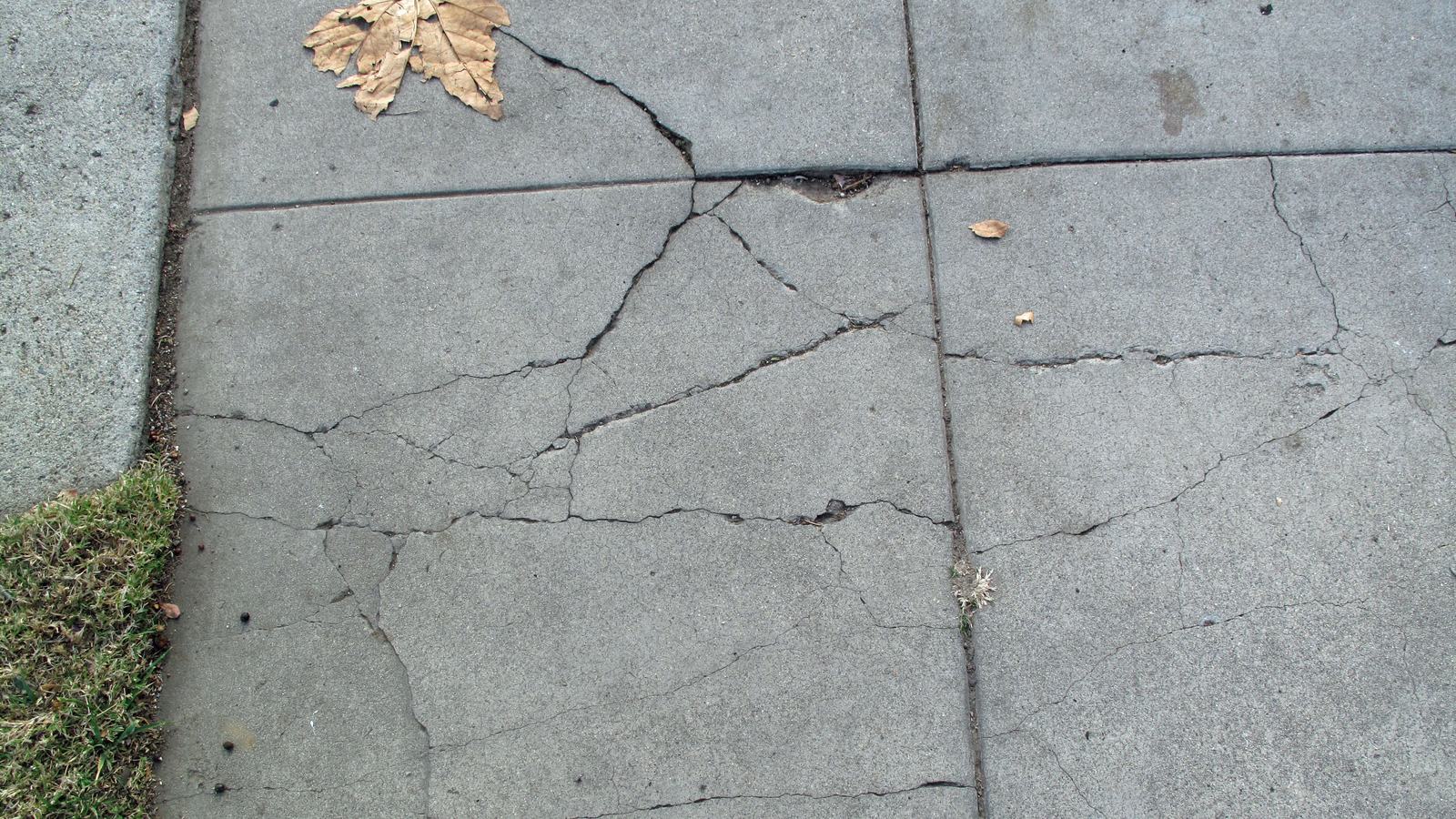
Photo: “Broken sidewalk LA” by Downtowngal (cropped), Wikimedia Commons, CC BY-SA 4.0.

Attorney Advertising. This article is general information, not legal advice, and does not create an attorney-client relationship. Prior results do not guarantee a similar outcome.